AI Voiceover Quality vs Human Narration in Training Video
AI narration is ready for training video where clarity and consistency matter most.
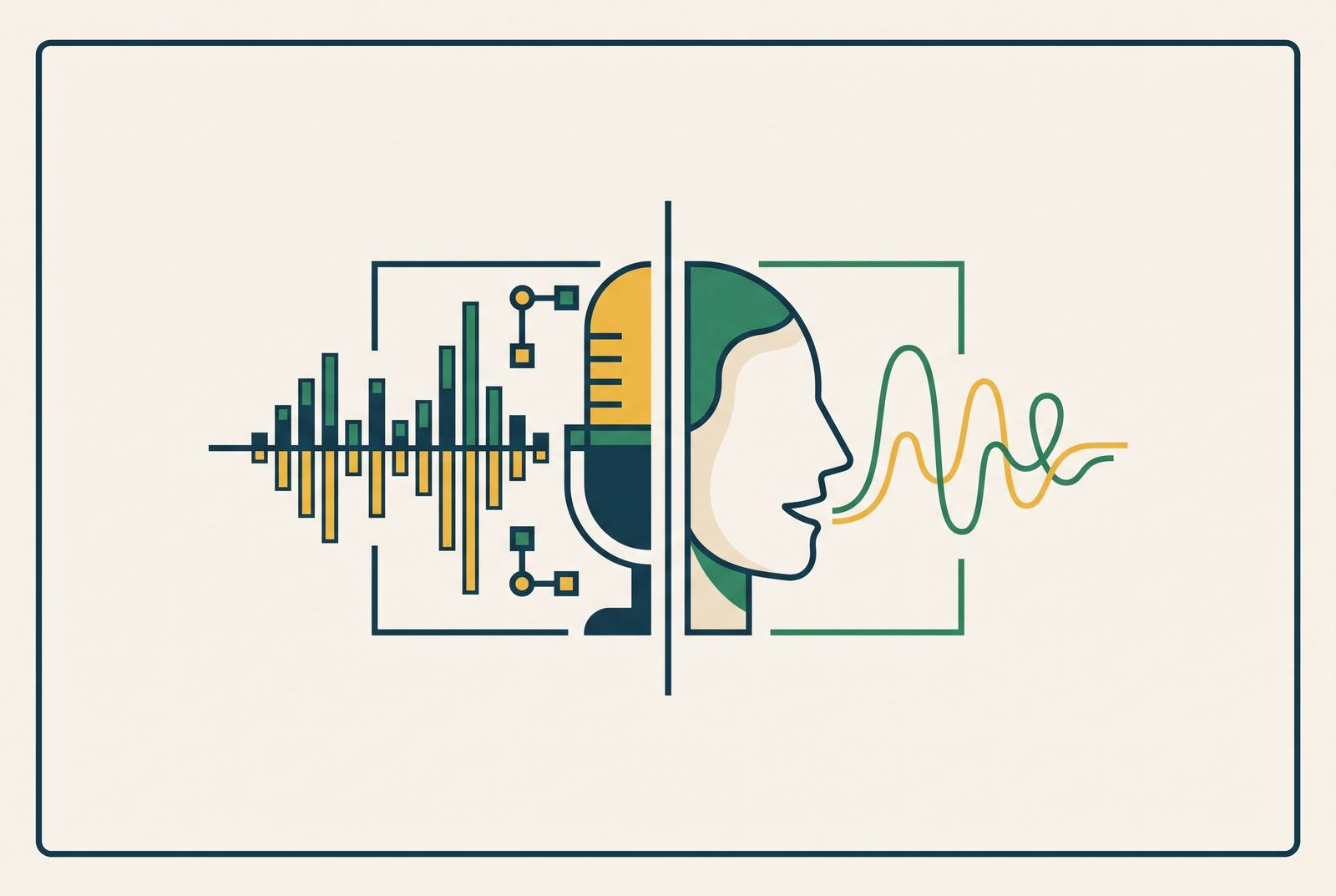
AI voiceover has crossed a real quality threshold for training video specifically, and that threshold sits in a different place than it does for other formats. This piece draws a line around where AI narration is ready to carry a production and where a human voice still earns its spot, so training teams can make that call project by project instead of picking a side once and sticking with it forever.
The AI-vs-Human Voiceover Debate in Training Video
Most arguments about AI versus human voiceover get written by people thinking about audiobooks, ads, or film, and those arguments don't hold up when you move them over to training video. A listener picking up a novel wants to feel something and stay with a narrator for eight hours. A learner watching a software walkthrough wants to know which button to click next, and wants to know it the first time, without replaying the clip three times to catch a word.
Training video asks something different of its narrator: help someone understand a process well enough to repeat it on their own. That's a task-completion goal, not an emotional one. It changes which qualities in a voice actually matter, and it changes where AI narration stands up. A voice that sounds slightly synthetic but pronounces every term correctly and keeps the same pace from minute one to minute twenty will often serve a learner better than a warmer, more expressive voice that drifts in energy from one recording session to the next.
That's the frame this piece works from: a bounded claim about training video, not a verdict on voiceover in general. AI narration is production-ready for a specific, large slice of instructional content, and knowing exactly where that slice ends lets a team stop treating the choice as all-or-nothing and start treating it as a decision made fresh for each project.
What "production-ready" means for instructional narration
Before comparing AI and human narration fairly, it helps to agree on what success looks like for instructional audio in particular, because it isn't the same scorecard entertainment content uses. Four things matter most: how clearly the words come through, how steady the tone stays across an entire module, how well the pacing matches how much a viewer can absorb at once, and how easily the narration can be changed later when the underlying content changes.
Emotional performance and creative interpretation, the two things a skilled human narrator does better than almost anything else, rank lower here, because the learner isn't following a story arc, but a procedure.
Consistency deserves its own mention. It isn't just a nice-to-have; it's a teaching tool. A voice that shifts in energy or delivery style between recordings pulls attention away from the content and toward the narration itself, which works directly against retention. Standard, non-generative AI voices produce the same output every time they generate a line, which gives training content a kind of steadiness that's hard for a human actor to match across dozens of separate recording sessions. Newer generative AI text-to-speech systems don't always carry this guarantee. Results can vary slightly between generations even with identical input text, so teams relying on that consistency should check which type of system they're using.
Updateability belongs on this list as a production requirement, not an afterthought. A training video that takes days to revise every time a policy or interface changes is expensive no matter how polished the narration sounded at launch. The narration's job in a training video is to carry the viewer through the content accurately and without friction, not to make the viewer feel something about the narrator.
How AI voiceover technology reached its current quality level
The leap from merely usable AI speech to something close to human realism happened when text-to-speech systems moved from earlier neural models to transformer-based architectures. That shift matters for anyone judging AI voiceover based on an old impression. A lot of skepticism about AI narration quality is based on how it sounded several years ago, before this transition, and that comparison is now out of date.
For training video specifically, three things matter more than anything else: getting pronunciation right, keeping volume steady, and controlling speed. These three are exactly where current AI voice systems perform with no variation. A human recording session can drift in volume from the start of a take to the end, and files often need normalizing afterward to sound even. AI-generated narration doesn't have that problem, because the same settings produce the same output characteristics every time. That reliability, more than any single leap in how "natural" the voice sounds, is what makes AI narration workable for instructional content at scale.
Advantages of AI Voiceover in Training Video Production
AI voiceover is ready to use today for eLearning modules, software walkthroughs, compliance training, onboarding sequences, and internal process documentation. These are the formats where being clear and consistent produces better learning outcomes than being emotionally compelling, and AI narration performs best there.
Speed is one obvious advantage. Hiring a human voice actor means writing a script, sending it off, waiting for a recording, reviewing it, sending back revisions, and waiting again, a cycle that usually takes several days per video. AI narration turns the same script into finished audio in minutes.
Cost follows the same pattern. Professional voice actors are typically paid by the hour of finished audio, while AI services charge a fraction of that per word or minute. That price gap is what makes a large training video library financially realistic for teams that could never have afforded dozens of separate professional recording sessions.
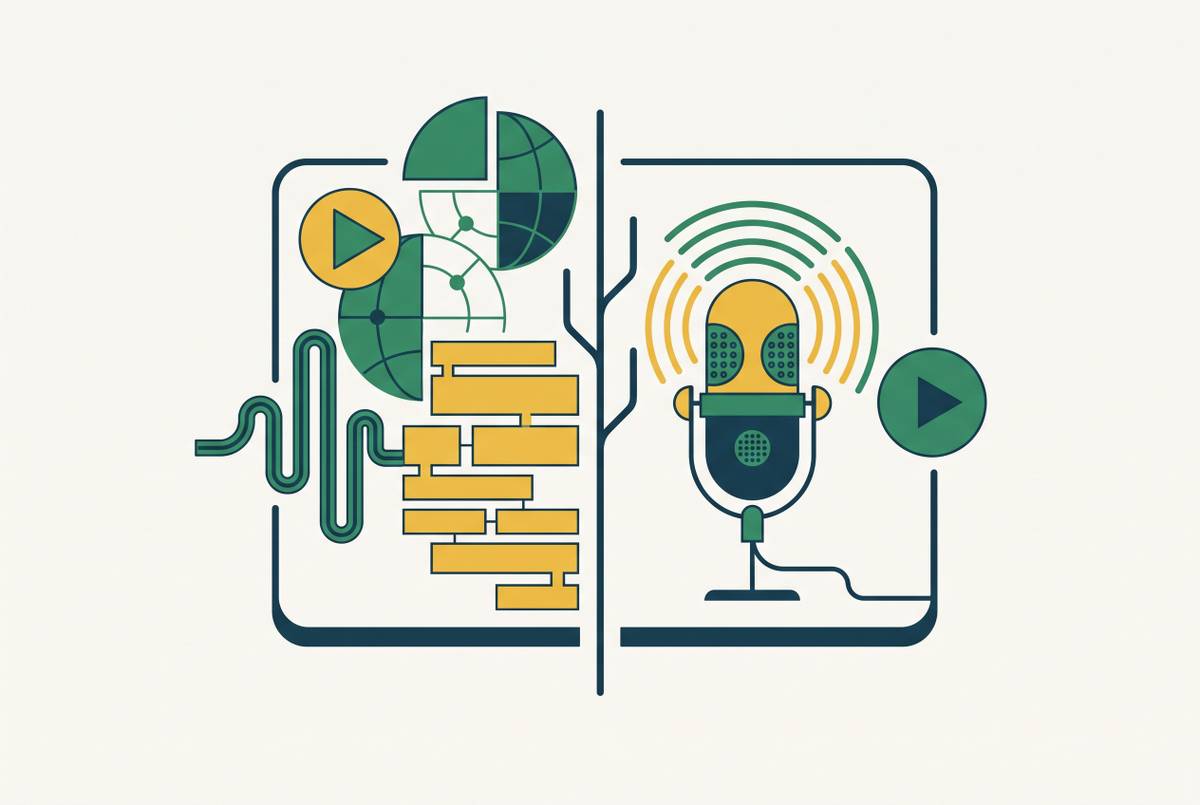
Localization is where the advantage gets even larger. Producing training content in multiple languages with human narrators means casting, scheduling, and directing a separate voice actor for every single language, a process that doesn't scale for most teams no matter how much budget they have. AI voiceover platforms can do the same job from one script, and voice cloning can keep the same vocal identity consistent across every language version. That turns multilingual training from a budget problem into a scheduling decision. And the stakes aren't just convenience: learners understand material more fully when it's delivered in their own language rather than a second language, which makes native-language narration a genuine instructional advantage, not just a nice extra.
Updateability is also a concrete production advantage. When a compliance rule changes, or a piece of software gets a new interface, AI voiceover lets a team regenerate just the affected scenes. One production workflow replaced full re-edits with this kind of scene-level regeneration whenever compliance reviewers asked for a change, cutting out the re-booking and re-recording cycle completely.
A real example makes the case concrete. New Com Academy expanded its training library into multiple languages without reshooting any of its original content. Its CEO, Michael Kibele, said the AI translation handled complex technical terminology with precision, and that the company cut costs significantly in the process.
Where Human Narration Still Earns Its Place
The strongest case against going all-in on AI narration for training video has nothing to do with audio quality. It comes down to trust. When a narrator's credibility is doing real persuasive work, not just conveying information, a human voice still carries weight that AI hasn't matched yet.
Several training contexts fall squarely into this category. Leadership messages and culture-setting content need a real person's voice, because the authenticity of that voice is part of the message itself. Sensitive HR topics, harassment policy, mental health resources, disciplinary procedures, depend on the learner feeling that an actual human being cares about the subject, not just that the information was delivered accurately. Financial and healthcare compliance training carries a high trust bar, where the audience's confidence in the material is itself part of what the training is meant to build. Customer-facing training also belongs here when the narrator functions as a stand-in for the brand. If learners connect that voice with the company's credibility, a synthetic delivery risks weakening that connection.
AI voices still struggle to reliably reproduce emotional range, subtle irony, whispered intimacy, or genuine humor delivered with precise timing. Training content that depends on any of those effects to land should stick with a human voice actor.
The real dividing line isn't whether the voice sounds human. Current AI narration clears that bar in plenty of listening conditions already. The narration needs to perform trust or empathy as part of what the learner is supposed to take away. If the answer is yes, default to a human voice.
The script is the variable that determines whether AI narration succeeds or fails
Once a team decides to use AI voiceover, the single biggest factor in how well it turns out isn't which tool they picked, but the script.
Writing meant to be read silently doesn't automatically sound natural out loud, and that gap is bigger than most writers expect. The problem compounds with AI narration, because an AI voice can't paper over awkward writing the way a skilled human narrator can. A human actor hits a clunky sentence and instinctively smooths it out through timing, emphasis, or a well-placed pause. An AI voice reads what's on the page.
That means AI narration needs cleaner punctuation, clearer phrasing, and explicit pronunciation guidance for anything unusual, like a product name or technical term. Any ambiguity a human actor would resolve through interpretation appears instead as an awkward pause or a mispronounced word in AI output. Human narrators also adjust pacing and add pauses that carry meaning on their own. AI handles steady, well-structured narration confidently, but it won't invent that kind of interpretation. The script has to do the work the actor used to do invisibly.
The practical upshot: teams switching to AI voiceover should budget more time for script review and editing than they did before, because a lot of the smoothing that used to happen in the recording booth now has to happen on the page.
A practical decision framework for choosing between AI and human narration by project type
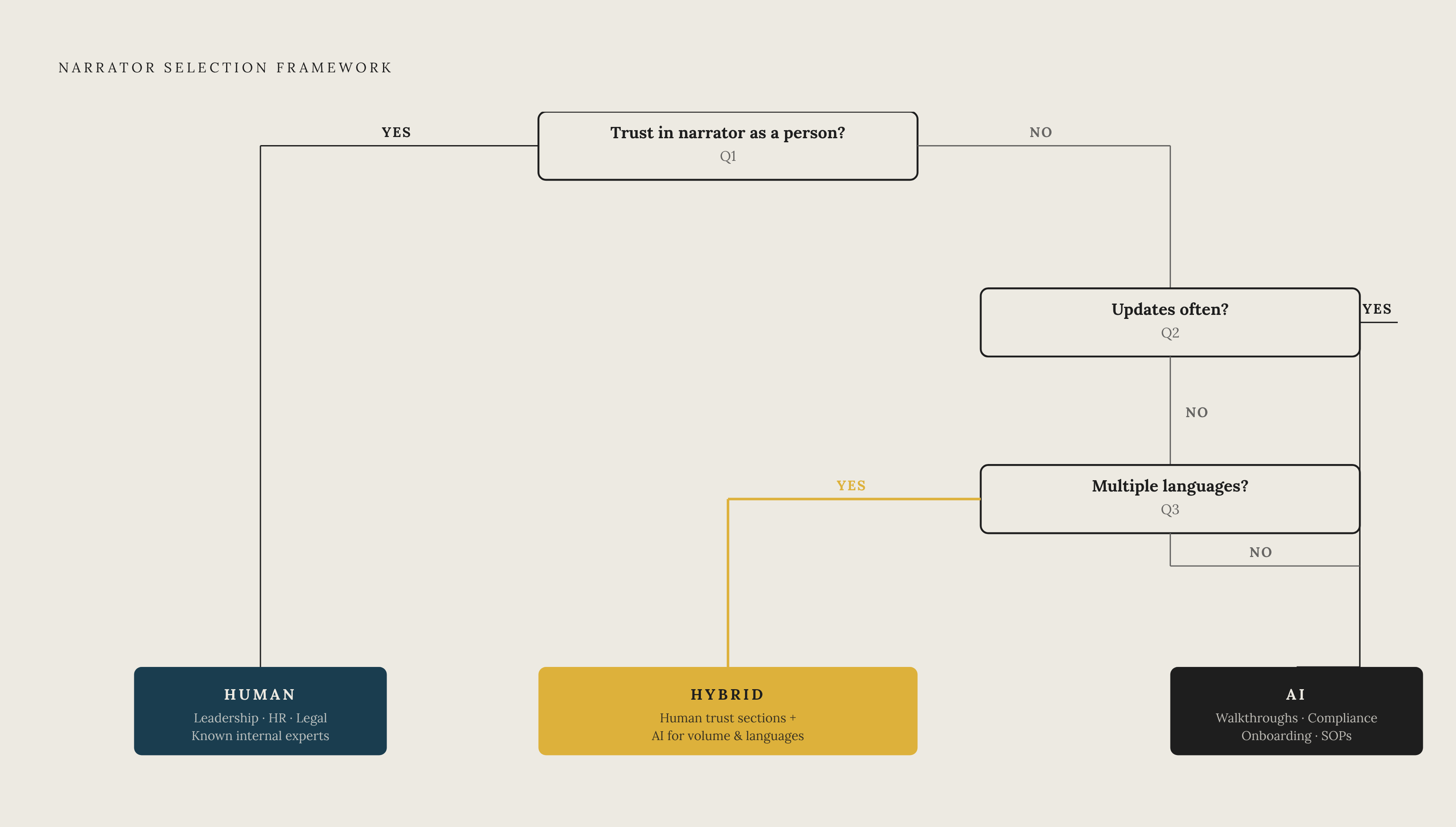
The right call here is a decision made project by project, and three questions do most of the work: does the learner need to trust the narrator as a person, will this content get updated often, and does it need to reach people in more than one language?
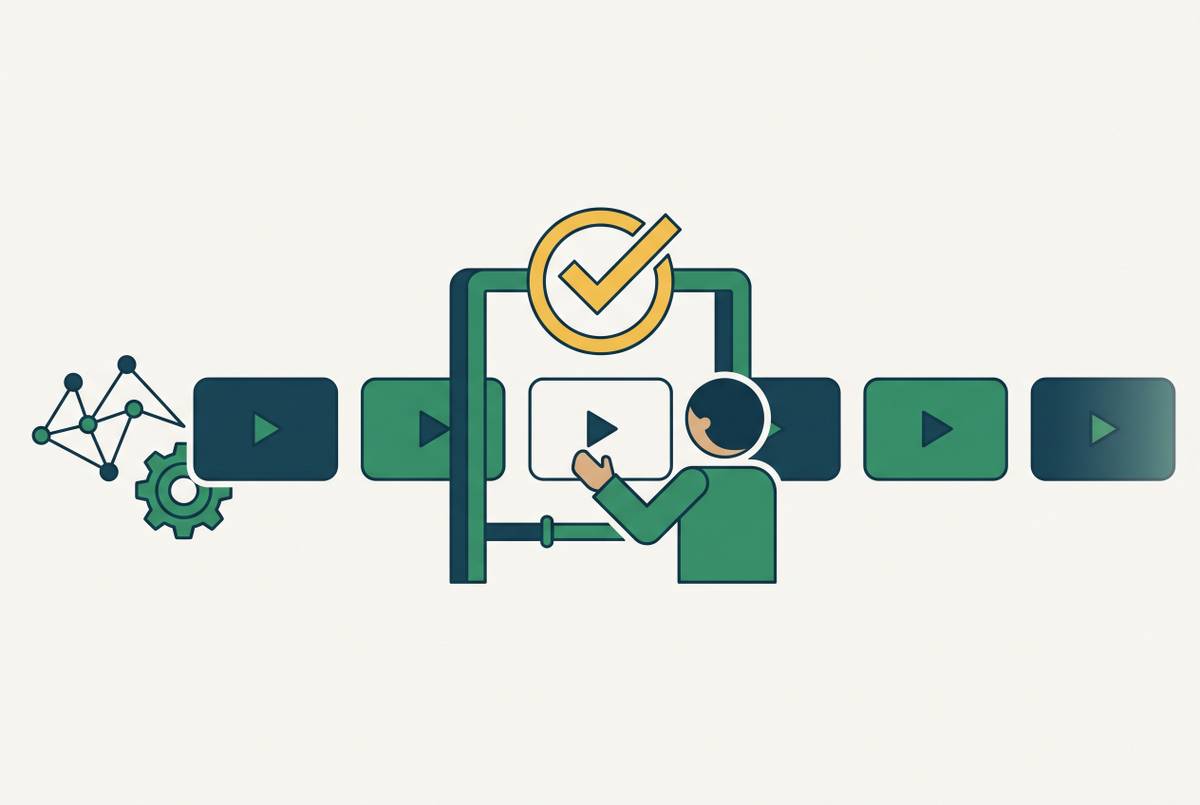
AI voiceover is the right choice for software walkthroughs, compliance modules, onboarding sequences, and process SOPs, because clarity and consistency are the main goals in all of those formats. It's also the right choice whenever a video is likely to need updates as interfaces, policies, or procedures change, since the ability to regenerate a scene without rebuilding the whole video is a structural advantage, not just a way to save money. The same goes for any content that needs to reach learners in more than a couple of languages, since localizing at that scale with human narrators alone simply isn't affordable for most teams. And when a team needs to produce a high volume of training videos without the staff or budget to record each one with a human voice actor, AI narration is the practical answer.
Human narration is the right choice for leadership messages, sensitive HR topics, and any content where the narrator's humanity is part of the design, not incidental to it. It's also the right call for high-trust domains like healthcare, financial regulation, and legal compliance, where the audience's confidence in the source shapes how well they learn the material. And it's the right choice whenever the narrator is a known internal expert or executive whose identity the learner is meant to connect with the content.
A hybrid approach is proving to work well in practice: AI voiceover for the bulk of a module's content, with a human linguist reviewing the script and checking pronunciation, and human narration reserved for the introduction, the leadership framing, or the sections that carry the most trust-sensitive material. It's a deliberate way of putting human attention where it actually changes the outcome and letting AI handle everything else.
How AI-assisted video and documentation tools fit this workflow
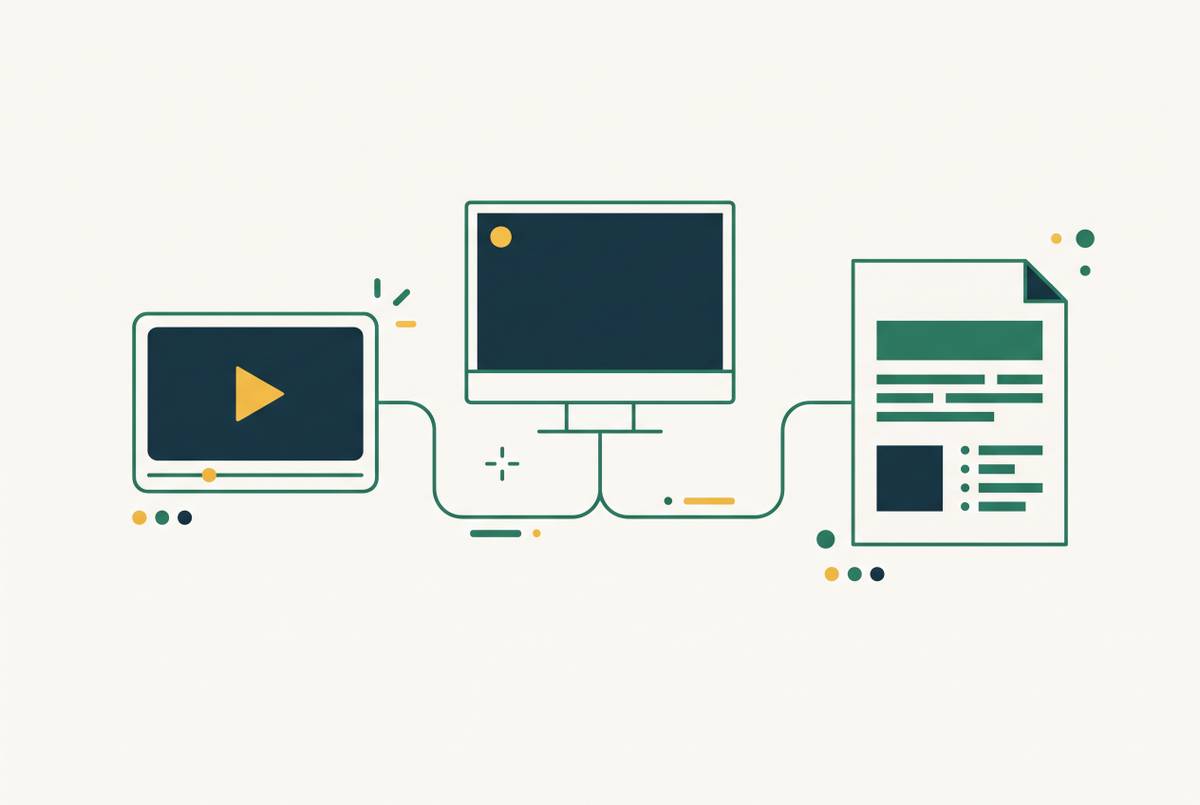
Most training teams today run one workflow where a single screen recording produces the video, the voiceover, the captions, and the written documentation together.
Tools aimed at tutorial and training teams increasingly handle that entire pipeline, voiceover, subtitles, step-by-step documentation, and translation, from a single upload, rather than forcing a team to stitch together separate tools for each piece. Clueso is one example built around that model: a team uploads a screen recording, the AI rewrites the script, adds a narration track, applies smart zoom and captions, and generates a matching SOP or help article from the same source material, all without needing a video editor or a dedicated production team on staff. One-click translation into more than 40 languages means a team choosing AI narration for multilingual reach can treat localization as a normal step in the workflow rather than a separate project with its own budget and timeline.
This kind of consistency, clarity, and updateability, where a voice can be regenerated identically the moment content changes without rebuilding the whole video, is why platforms like Clueso pair AI voiceover generation with automated video updates, letting a team refresh both the audio and the visuals of a training module in minutes rather than treating narration and video revision as two separate jobs. The same transformer-based models responsible for AI voices that stay accurate and consistent at scale are also behind the broader move toward end-to-end AI video production, where a raw screen recording turns into a finished training video with narration, captions, and documentation generated side by side, removing the old bottleneck of editing audio and video one after the other. And the cost advantage compounds as volume grows: where localizing one onboarding sequence into ten languages with human narrators might take weeks and a significant budget, AI-powered platforms can generate and regenerate narration in dozens of languages with one-click translation, making it realistic for a distributed or global team to ship localized training without leaving non-English speakers waiting months for a translated version.
The biggest obstacle in training video production is usually the workflow itself, specifically how many separate tools and handoffs stand between a subject matter expert and a finished video. Tools that let that expert produce a complete training asset on their own, without routing everything through a dedicated video specialist, remove the actual constraint that keeps most training libraries smaller and slower than they need to be.