Freelance Video Producers for Software Explainers
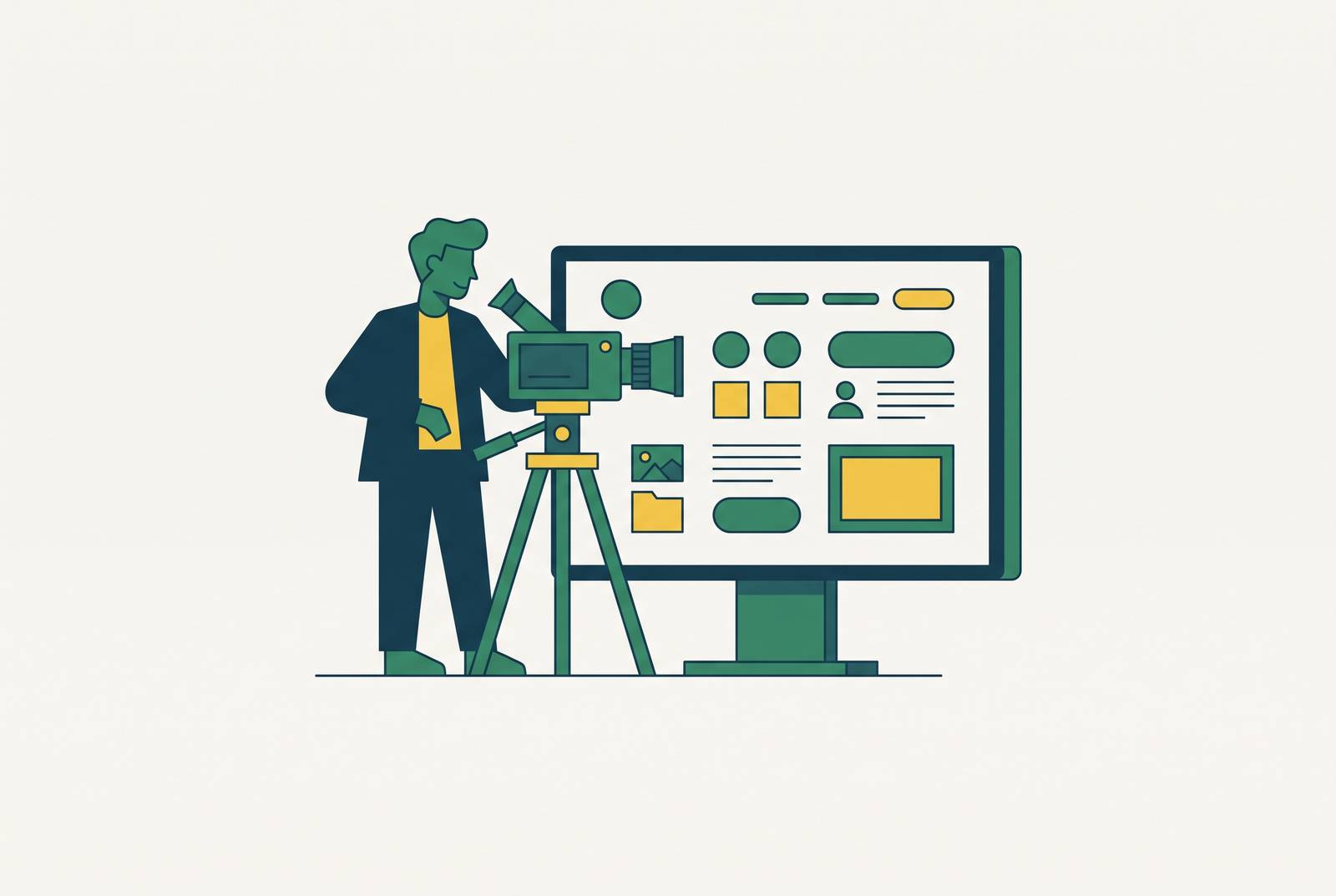
Hiring a freelancer for a software explainer video means evaluating for UI fluency, instructional pacing, and a production pipeline that starts with a screen recording, not a camera. Most of the freelance market was never built around that skill set, and getting the evaluation wrong costs more than the invoice. It costs the hours spent explaining your product to someone who's never seen it, and by the third revision cycle, in-house starts looking cheap by comparison.
What the freelance market for this work actually looks like in 2026
Rates tell the real story, and the story is that specialization is rare. Entry-level editors run $20 to $35 an hour. Mid-level sits at $40 to $80. Senior talent clears $100 to $150, and motion graphics or color specialists can run $80 to $200-plus. A medium-length explainer, priced per project, typically lands between $500 and $2,500.
For B2B SaaS work specifically, three models dominate: experienced freelance editors at $75 to $150 an hour, traditional agencies quoting $4,000 to $20,000-plus per project, and creative-as-a-service retainers around $3,000 a month, flat.
Most of that market is generalists, not specialists. That's the thing worth sitting with. The people who can read a SaaS interface fast and pace a tutorial around it are a sliver of the freelance video pool, buried under a much larger group whose experience runs to brand spots, social cuts, and wedding reels. Rate alone won't tell you which one you're hiring. A high hourly quote can come from someone who's never opened a screen recording tool for a client, and a lower hourly quote can come from someone who's spent three years doing nothing else.
Wyzowl's 2026 report puts full outsourcing at 10% of video marketers, down from 24% in 2024. Teams are moving toward hybrid and in-house setups, and that changes what freelancers actually get hired for: overflow work, finishing touches, specialist jobs. Not full ownership of a video program. The shift tracks almost exactly with how AI tooling matured over the same two years, and it's not a coincidence worth ignoring.
The skills a software explainer producer actually needs
Screen recording literacy comes first, and it isn't optional. A producer needs to be comfortable with capture tools, cursor behavior, and zoom-to-click logic, because the raw screen recording is the primary visual track of a software explainer, not B-roll dressed up around talking-head footage. Anyone who treats it as secondary material has misread the format, and it usually shows up in the first ten seconds of their reel.
UI fluency matters just as much. A producer needs to read a SaaS interface fast enough to catch a deprecated button, an old menu structure, or a flow that no longer matches the narration. That's a different skill from grading footage or cutting to a beat, and it's the one most generalist editors skip past because nobody ever asked them to develop it.
Pacing is where generalists actually trip. Brand video and social content reward quick cuts and constant movement, because the goal is holding attention. Instructional video runs on a different clock, one built around comprehension, not stimulation. A cut that lands before the viewer has seen where the cursor went kills retention instead of building it. Strong freelancers flag this unprompted, telling you a script races past a UI interaction the viewer needs three extra seconds to absorb, before you even ask.
Motion graphics show up here too, in a narrower form than most people assume. Zoom, highlight boxes, cursor emphasis, annotation overlays: that's the visual grammar of the format, and it isn't the same job as full motion graphics production. A producer who prices in a motion graphics specialist rate without delivering that specific output is worth pushing back on before the contract's signed.
A few other things separate strong hires from plausible ones. Documentation adjacency helps, since video and step-by-step written docs often come from the same recorded content event. AI-assisted workflow competence matters too. Platforms like Clueso, which turns screen recordings into polished product videos automatically, show what that pipeline looks like when AI handles the grunt work. Editors doing well in 2026 lean on AI for rough cuts, transcription, captions, and basic color matching, then spend their judgment on pacing, accuracy, and structure. Anyone running zero AI in that pipeline is slower and more expensive than their quoted rate suggests, full stop.
Version control mindset separates professionals from amateurs. Software UIs change constantly, so a good freelancer asks about update cadence before quoting, and builds source files that can actually be revised later instead of flattened exports that force a full re-edit down the line.
How to evaluate a freelancer's portfolio before the first conversation
Start with the obvious question: does the reel show actual software UI, or animated mockups and stock footage? Animated mockups are a real skill. They're not a substitute for screen recording fluency, and treating the two as interchangeable is the fastest way to hire the wrong person for this specific job.
Watch pacing closely after that. Does the viewer get enough time to actually see what was clicked before the cut moves on? Are callouts and zooms guiding the eye to something specific, or scattered in decoratively because it looks polished? Check narration sync too: good voiceover describes what's happening on screen at the moment it appears, not two beats early or two beats late. Look for instructional intent, a real beginning, middle, and end that teaches a task, rather than a highlight reel of features stitched together.
Portfolio gaps tell their own story. Only brand or social work in the reel usually means fast, polished output that's never been calibrated for UI density or instructional pacing. Only animated explainers might mean the person has never worked from a raw screen recording. No software or SaaS client work at all is the clearest flag, and it matters more than it looks, because the learning curve for UI fluency is real. It gets billed to you in review hours and corrections whether or not it ever shows up on the invoice.
One diagnostic beats everything else on this list. Ask to see a before-and-after, the raw recording next to the finished cut, side by side. It's the single artifact that shows whether someone actually knows this format or just talks like they do.
The questions that separate strong candidates from plausible ones
Process questions reveal the most, fast. Ask what happens between receiving a screen recording and delivering a first cut. A structured answer means a real workflow. A vague one means improvisation, project by project, and that's the candidate to be wary of. Ask how they handle a recording where the presenter misclicks or wanders down the wrong path, since every screen-recording project runs into that eventually. Ask directly which tools they use and which steps they hand to AI. A producer running zero AI in the pipeline has a real efficiency gap in 2026, whether they admit it or not.
Judgment questions matter just as much. Ask how they decide where to cut within a tutorial step, and listen for language about cognitive load rather than just visual rhythm. Ask whether they've ever pushed back on a script because it didn't match what the recording actually showed. That single answer tests UI literacy and professional backbone at once, and it's usually where strong candidates separate from merely confident ones.
Volume questions protect you later. Ask about the most videos they've turned around in a single week, and what that workflow looked like, so the capacity ceiling shows up before you're depending on someone who can't scale. Ask how they build source files, because a producer who only delivers flattened exports is quietly committing you to a full re-edit every time the product ships an update.
If the team serves global users, ask about localization directly. Has the producer built content meant for translation, and how did they structure the project to make that possible?
Red flags cluster in a predictable pattern: vague process answers, no specific tools named, no examples of working from raw footage, and quotes built purely on a per-finished-minute rate without ever having seen a sample of the actual content.
Scoping the engagement before work begins
A software explainer brief needs elements a standard video brief doesn't ask for at all. Start with the product version or build the recording reflects, so the producer knows the exact moment that footage goes stale. Define the audience clearly, new users, power users, internal staff, or prospects, since that determines how dense the instruction needs to be and how much UI familiarity can be assumed going in.
Set target length by video type and anchor it to what actually holds attention: 30 to 90 seconds for quick tips, 2 to 5 minutes for tutorials, 5 to 10 minutes for onboarding modules. Completion rates drop by half once a video runs past 6 minutes, so length isn't a style choice. It's a comprehension budget, and it should drive the brief before anyone picks up a camera or opens a recorder.
Nail down voiceover sourcing early. Does the team provide the narration audio, or does the producer need to script and source it? Spell out deliverable format too: export specs, branded templates, and whether written documentation is expected to come out of the same project.
Revision terms deserve their own line in the scope. How many rounds, what triggers an extra one, and critically, who has final say on UI accuracy versus who's giving stylistic notes? Those are different kinds of feedback, and they shouldn't run through the same approval chain by default.
Two more items belong in writing before a single frame gets cut. Clarify whether this is a one-time project or a recurring need, since that answer determines whether a per-project rate or a retainer actually makes economic sense. Settle source file ownership up front, editable project files, not just final exports, because the UI will change again next quarter and someone will need to update the video without starting from zero. If localization is part of the plan, say so before editing begins, since narration pacing, on-screen text, and subtitle-safe framing all shift once translation gets built in from the start rather than bolted on after.
Volume, velocity, and when a freelancer is the right fit, and when it isn't
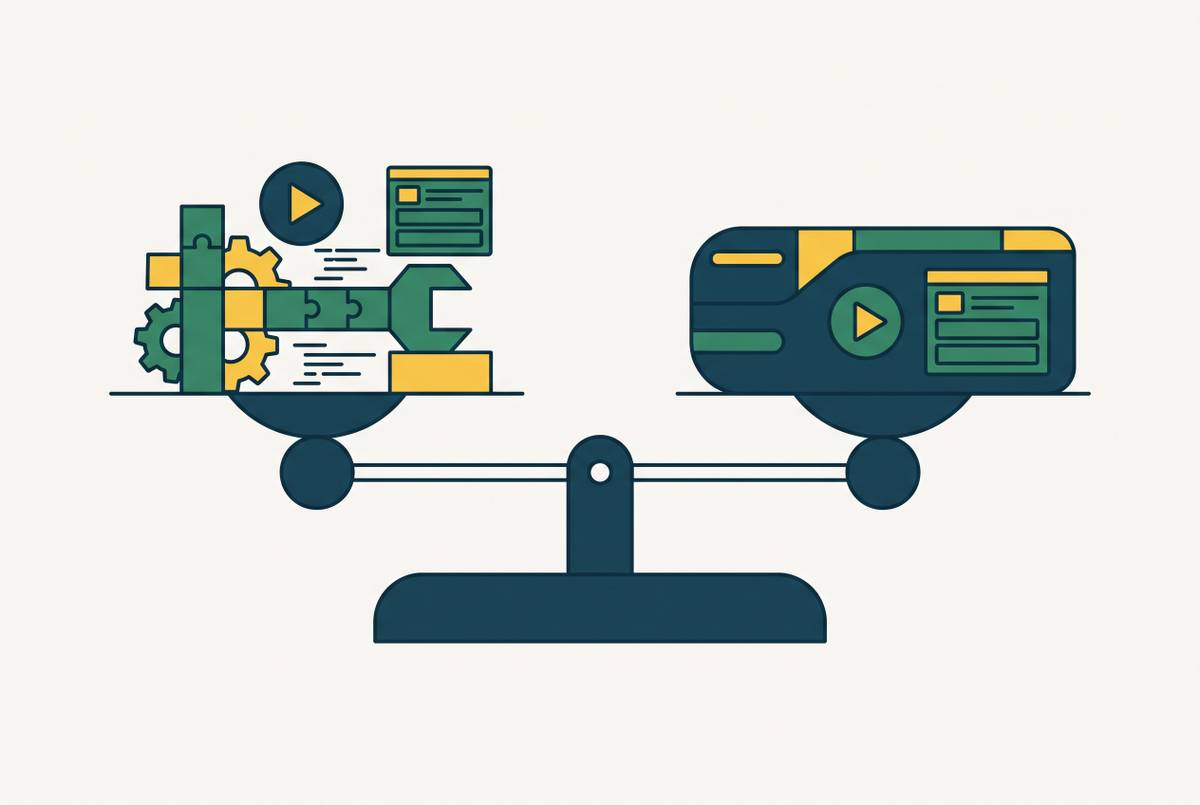
Freelance makes sense in a narrow set of conditions, and it's worth being honest about how narrow. Occasional, high-stakes videos, where the payoff per video justifies a per-project cost and a flexible timeline, are a good fit. So is genuinely specialized work: complex animation or custom motion graphics that still needs a human eye no current tool fully replicates. Teams early in their video program, shipping a handful of videos a month at most with lead time to spare for a one- to two-week turnaround, do fine here too.
Outside that zone, the model breaks down under a few predictable pressures, and it breaks down hard. High-frequency update cycles are the first: if the product UI shifts monthly or quarterly, the video library needs to move at the same speed, and freelance turnaround almost never keeps pace. Multi-language delivery is the second, and the math turns brutal fast. Traditional studio dubbing carries significant per-minute costs; scale that across several languages on a freelance basis and the economics stop working entirely.
Cross-functional demand is the third failure point. Once customer success, learning and development, product, and sales all need video independently, a single freelancer turns into a bottleneck no matter how good they are. Timeline pressure is the fourth: agencies run $4,000 to $20,000-plus per project, and freelancers at mid-to-senior hourly rates still need briefing time, feedback rounds, and revisions that eat into a launch window that was already tight.
The market has already made its call. Wyzowl's 2026 report puts full outsourcing at 10% of video marketers, down from 24% in 2024, with a growing share now producing in-house, frequently with AI tools in the mix. A team leaning toward freelance today is swimming against that current, and the reasons aren't mysterious: run the actual math before committing. Past a few polished videos a month, the per-video cost of a freelancer at $75 to $150 an hour stacks up against a roughly $3,000-a-month retainer or an AI-assisted in-house setup faster than most teams expect.
What an AI-assisted in-house workflow can handle that a freelancer can't easily replicate
Some capability gaps here are structural, not about talent. An in-house AI-assisted pipeline can take a screen recording straight through to a finished, polished video without ever handing it off to an outside party who first has to learn the UI from scratch. Script rewriting, AI voiceover, smart zoom, and caption generation happen inside the same workflow, automatically, and that's the exact grunt work that eats up a freelancer's billable hours one task at a time.
Video and written step-by-step documentation can come out of the same recorded event together, a combination no freelancer produces without a separate documentation tool and a second full editing pass. Localization becomes a translation step rather than a fresh engagement with a dubbing specialist for every language, which directly undercuts the significant per-minute dubbing costs noted earlier.
A 2026 Engageli study found teams using AI-powered video training tools saw development time drop sharply and course completion rates rise meaningfully compared to traditional text-based training. That's not just a speed story. It's a comprehension story, and it's the number that should settle most of this argument on its own.
None of this erases the value of human judgment. AI handles execution. People still own the script, the pacing calls, and the accuracy review, the same division of labor a well-run freelance engagement should already produce, minus the external dependency. Nothing here replaces what a skilled producer brings to a genuinely complex, one-off, high-production piece that deserves a human eye from start to finish, either. Both models earn their place. The decision comes down to volume and velocity, not which one makes the better video.