Departmental Self-Service Video vs Centralized Production Team
Blend centralized production with self-service based on content type and volume.
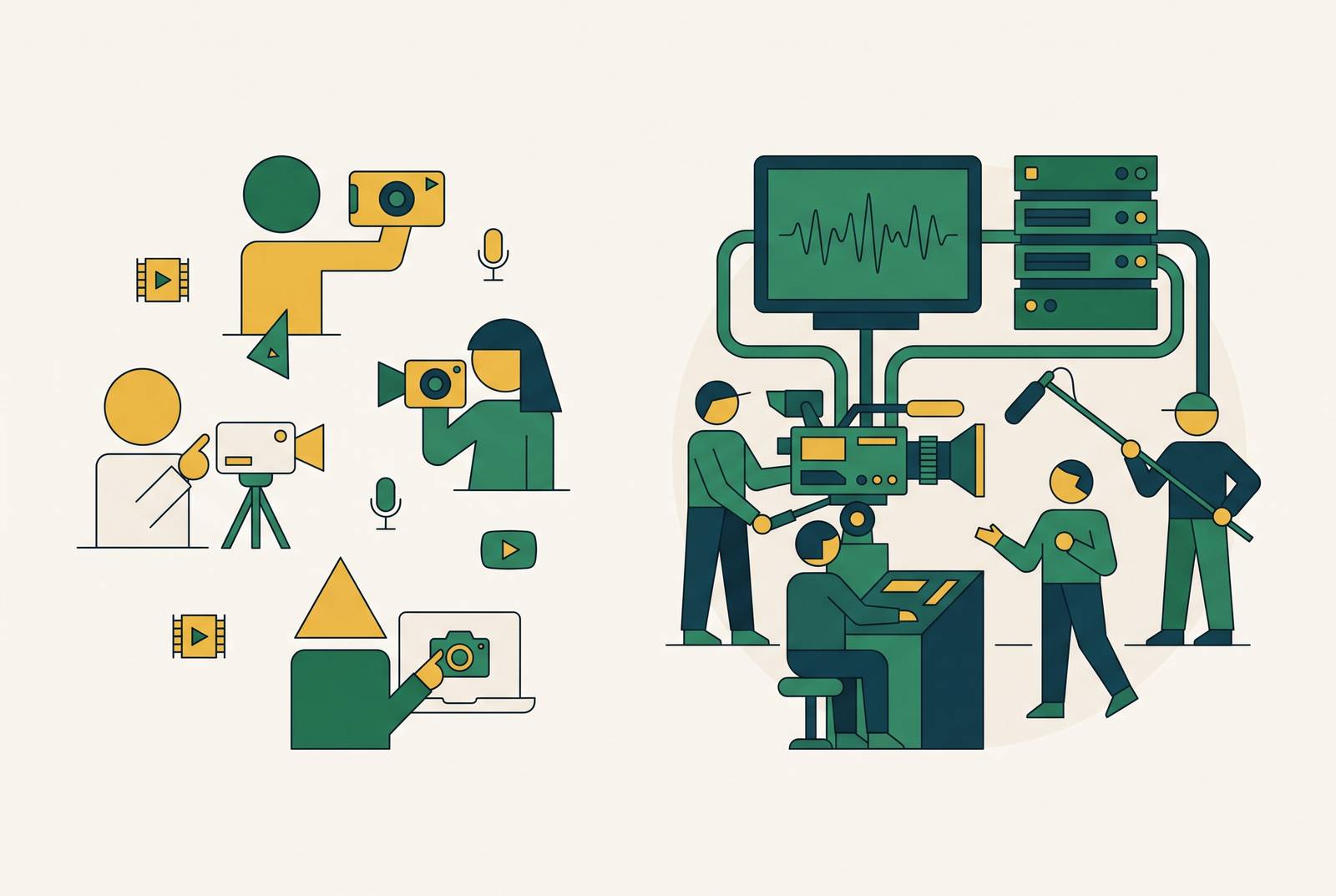
Software teams keep treating this as a fork in the road: centralized production team or departmental self-service, pick one. That's the wrong question to ask. The real tension runs between speed and volume on one side, quality and brand control on the other, and every software team hits it eventually. Sometimes it shows up as a backlog of requests a central team can't clear. Sometimes it's a folder of shaky screen recordings quietly undercutting the brand.
Neither model solves both problems on its own, and the teams that pick one and stick with it are making a mistake. The real question is narrower: for a given content type, at a given volume, with a given quality bar, which model, or which blend, actually gets the job done?
What a centralized production team does well, and where it breaks down
Centralized teams exist for a reason. They keep brand identity consistent (color, typography, tone, logo placement) enforced at the source instead of policed after the fact. They bring narrative depth and creative direction a rushed screen recording can't fake, and legal or compliance review sits inside one workflow instead of scattered across a dozen teams. For high-stakes, low-frequency work like brand films, executive announcements, or a major product launch, this is the right model. Full stop.
The trouble starts when volume climbs.
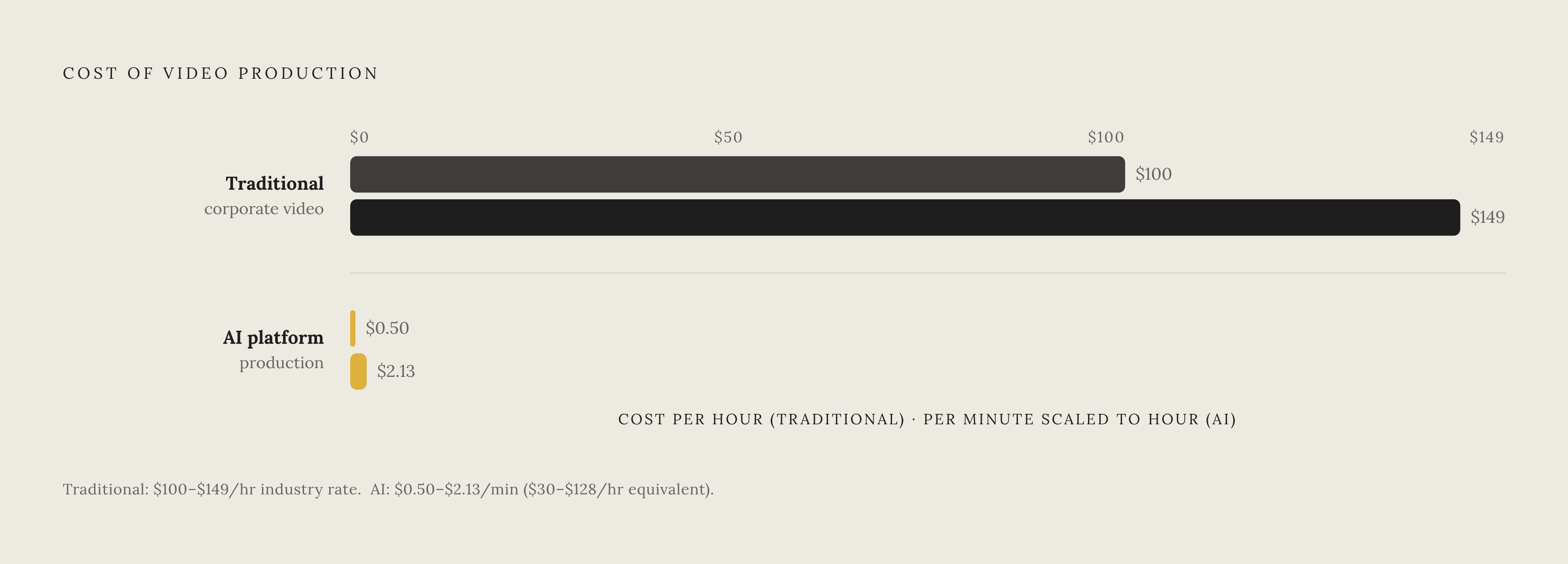
Intake queues turn into bottlenecks fast. A customer success team that needs 20 how-to videos this sprint can't sit around for six weeks waiting on a production slot. Traditional corporate video production runs $100 to $149 an hour once crew, studio time, and editing cycles get counted, so cost per video stays high no matter how tight the team runs. And headcount scales in a straight line with output: more videos just means more producers, not smarter production.
There's a subtler cost, too, and it's the one most teams miss. The person who actually knows the product, the subject matter expert, gets filtered out of the process, and someone else explains it on screen instead. When the product's UI changes next month, that video needs another full production cycle just to catch up. Libraries go stale quietly, one release at a time. Centralized teams end up gatekeeping the very departments they were built to serve.
Centralized production earns its keep on flagship content. It was never built to carry the weekly, high-volume load a software company generates. Treating it like it can is the actual mistake most teams make here.
What departmental self-service actually produces, and what it tends to get wrong
Self-service flips every one of those constraints. Whoever knows the workflow can record it and publish it without waiting on anyone. Subject matter experts across CS, learning and development, product, and sales all work in parallel instead of queued up behind each other. Currency stops being a problem, too: whoever updates the process is the same person who updates the video explaining it.
Self-service without guardrails fails in predictable ways, though, and pretending otherwise is how departments end up with a library nobody can use.
Raw screen recordings pile up: background noise, shaky zooms, no narration polish. That signals low effort to the customer or the new hire watching it. Each department builds its own templates and tone, so the library fragments, one team polished, another rough, nothing tying them together. Worse, there's often no intake process at all: no naming convention, no index, just videos scattered across folders nobody can find six months later.
The promise of self-service is real. What collapses it isn't the model itself, it's the absence of a system that catches quality problems at the moment of creation, not after. Most departments never build that system until the mess forces their hand.
How content type and volume pressure should drive the model choice
Not every piece of video content carries the same weight, and the right model follows directly from which bucket a given piece falls into.
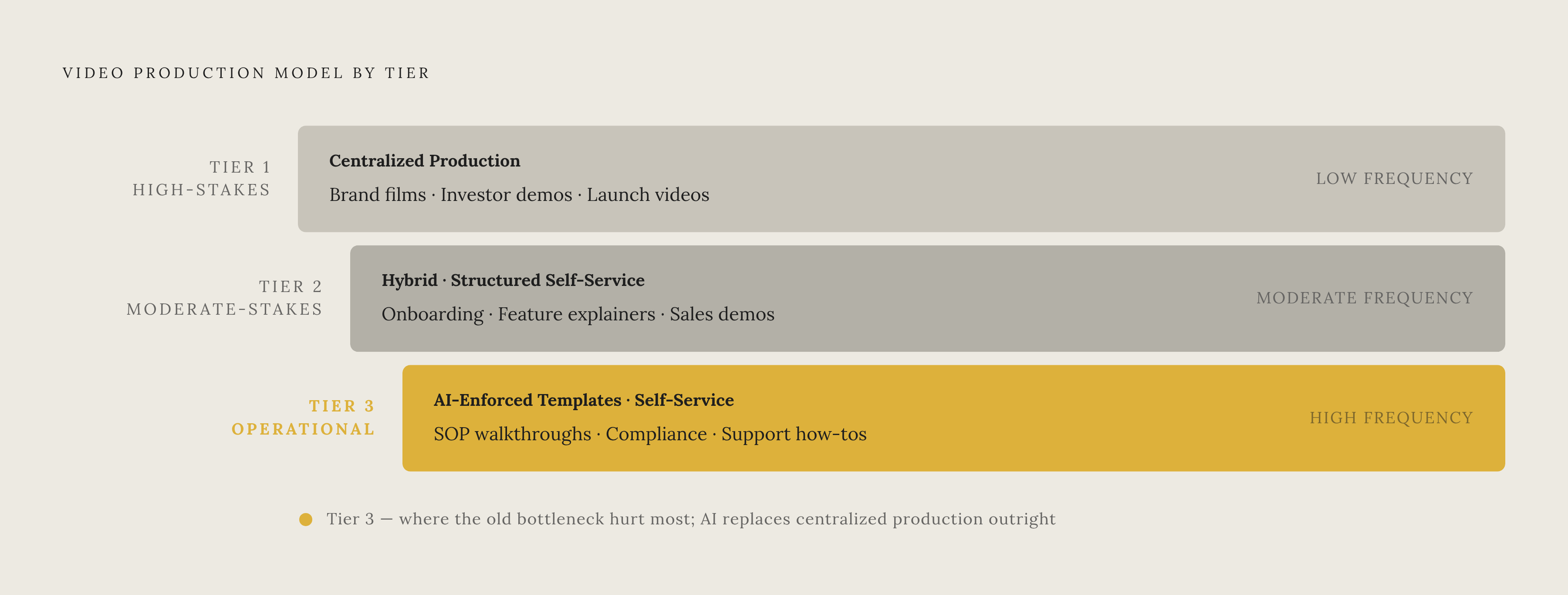
High-stakes, low-frequency content belongs with centralized production: brand films, investor demos, launch videos, anything where narrative craft or executive sign-off justifies the time and cost.
Moderate-stakes, moderate-frequency content calls for a hybrid or a structured self-service setup: onboarding sequences, feature explainers, sales enablement demos. These need to look professional and stay current, and they get made over and over across different product areas, so the quality bar isn't optional here.
High-frequency, operational content is where self-service with enforced templates wins outright, no contest: SOP walkthroughs, internal training updates, compliance refreshers, support how-tos. This content changes constantly as the product evolves, so re-production cycles are the real hidden cost. One B2B SaaS team went from 12 customer education videos over three months to 150 videos in a single month after adopting AI tooling, a jump a centralized queue simply cannot reach.
Map the backlog by type and frequency before picking a model. Most teams will find their content spans more than one bucket, and that's itself the argument for a hybrid.
Why localization and content currency make the model choice even more urgent
Video libraries go stale faster than most teams expect. Policies shift, the UI changes, workflows evolve, and every one of those changes creates another editing backlog under a centralized model.
Localization multiplies the problem. Traditional localization runs well into the tens or hundreds of dollars per minute of video, so even a modest library across multiple languages adds up fast in translation spend alone, before anyone touches the original production cost. Global reach is turning into a baseline expectation, not a premium add-on, and a centralized team that has to re-record, re-edit, and re-localize every update isn't built to hold up at that scale.
Currency and localization compound together, and this is where the math turns ugly. A modest library of 50 videos, updated quarterly, delivered in five languages, generates hundreds of production events a year. That's the point where linear headcount scaling stops being a scaling problem and turns into a wall.
What AI actually changes about the production model tradeoff
The old tradeoff was real: quality required specialists, and specialists created bottlenecks. AI breaks that equation by automating the parts of production that used to need a specialist standing in the room.
AI now handles script cleanup from rough recordings, lifelike voiceovers with no studio or voice talent needed, automatic zoom and captioning, and brand template enforcement at the moment of creation instead of in a post-production review. One-click localization removes the per-language cost structure entirely. Some tools generate video and written documentation from a single recording, in parallel.
What AI doesn't touch: narrative strategy, editorial judgment, the emotional tone that defines a brand's voice, compliance sign-off, and the creative differentiation flagship content still needs. Those stay human. Full stop.
The economics settle the argument on their own. AI video production runs roughly $0.50 to $2.13 per minute on AI platforms, against $100 to $149 an hour for traditional corporate production. At any real volume, that gap swallows whatever the platform costs to run.
AI doesn't replace the centralized team across the board. It replaces the centralized team specifically in the high-frequency, moderate-stakes tier, which happens to be exactly where the old bottleneck hurt the most.
The hybrid model in practice: which team owns which content tier
The hybrid model isn't a compromise between two imperfect options. It's a deliberate split of labor by content tier, and treating it as some middle-ground settlement is where most teams get the design wrong.
Centralized production keeps ownership of brand standards, master templates, and the approved asset library. It owns flagship and high-stakes video. It owns governance too: intake criteria, quality review triggers, publication standards, the rules everyone else works inside.
Departmental teams get production authority over how-to videos, SOP walkthroughs, feature explainers, internal training modules, onboarding sequences that need constant updates, and localized versions of already-approved content for regional teams.
AI tooling is what actually makes the split hold together. It enforces the brand template automatically, so a departmental creator can't drift from the approved look even without someone from central checking every single upload. That only works with real structure underneath it, though: a defined intake process spelling out what goes to central and what gets self-served, locked templates, a shared library with actual naming conventions instead of a folder nobody can search, and clear ownership, meaning the team running the process owns the video that documents it.
The B2B SaaS team that scaled from 12 videos to 150 in a month didn't just gain volume. Support tickets dropped significantly in that same stretch. Volume and quality moved together there. Volume alone wouldn't have done it.
How to audit your current setup and move toward the right blend
Start with a content audit, not a tool audit. List every recurring video need by team and by frequency, then tag each one by tier: flagship, moderate-stakes, or operational. Note which items sit stuck in a central production backlog and which ones simply never get made at all.
Measure the maintenance burden honestly next. How many videos in the library are already out of date because a process or a UI changed underneath them? How many languages does the audience actually need, and what is per-language production costing right now?
Find the real bottleneck before reaching for a fix. If content isn't getting made because of a queue, self-service backed by AI tooling solves that. If content is getting made but looking rough, tooling with brand enforcement solves that. If content is getting made but going stale fast, an ownership model with clear update responsibility solves that, and no new software fixes it without that ownership piece in place.
Put the governance layer down before rolling self-service out at scale. Approved templates and asset libraries need to exist before anyone goes independent. Intake criteria need to spell out what requires central review versus what publishes on its own. And a naming and storage system needs to keep the library searchable a year from now, not just this week.
The teams producing more video, and better video, aren't the ones with the biggest budgets. They're the ones that built a repeatable system around production, one that decides ahead of time who owns what. AI is what makes that system reachable for teams that never had the budget to build one before.