Buying for the CSM Not the Editor When Evaluating Training Video Platforms
Focus platform selection on ticket deflection and speed, not production features.
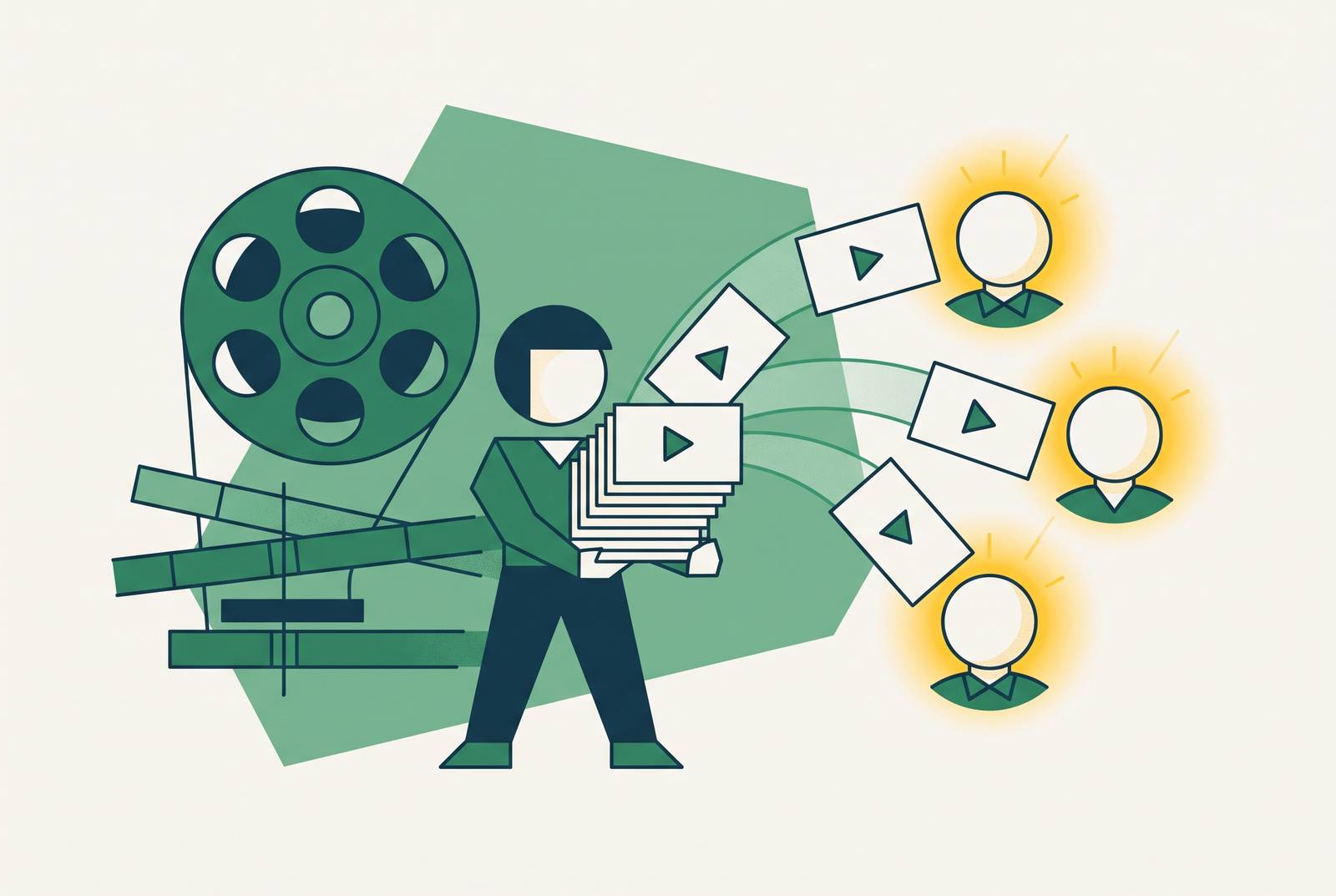
Customer success and L&D teams can create training videos without a media team when AI handles production work and the people who know the customer keep control of the teaching. Buying for the CSM means judging platforms on ticket deflection, onboarding speed, localization reach, and ease of updates.
Why training video platform evaluations are built around the wrong buyer
The CSM is sitting with the same ticket queue, even though the newly purchased video platform is ready to use. Onboarding still stalls at the same steps, and accounts in other markets still lack localized guidance. The team has more production tools, but giving customers those answers is no easier. That is the gap a training video evaluation should expose before a contract is signed.
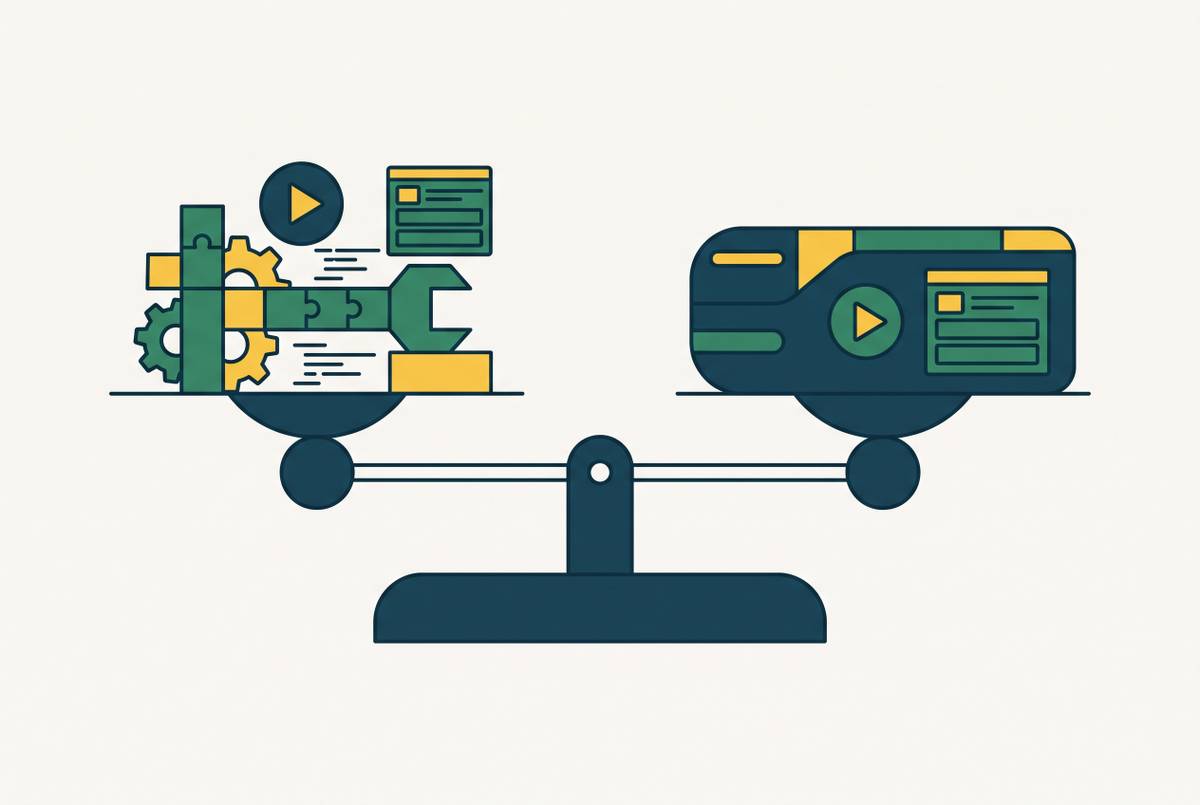
Instead, procurement teams and IT stakeholders typically judge what a vendor can demonstrate neatly. Timeline editors, avatar quality, and transition effects are visible in a demo. Their effect on a CSM’s workload is not. The mismatch is structural because the people selecting the platform judge production capability, while the people using it need operational reach. A platform can pass the first test and end up unused because it fails the second.
Gartner’s Magic Quadrant for Customer Success Management Platforms, published 3 November 2025, frames evaluation around guiding customers to value, providing visibility into customer health, and scaling the customer success practice. Its scope is CSM platforms. Still, those goals give the video purchase a useful frame because customer training serves the same work. A polished editor is not evidence that customers will get answers sooner. The relevant test is whether the CSM can turn customer knowledge into guidance that reaches accounts and stays useful.
What the CSM's job actually requires from a video platform
A CSM’s video workflow has three constraints, which are speed of creation, ease of maintenance, and reach across accounts and languages. Someone with six customer calls on the calendar who needs a video by Thursday cannot take on a specialist production process. The platform must fit the time available between customer work, rather than require a new job built around making videos.
The CSM already knows where customers get stuck. That knowledge includes the step users skip, the label they misread, and the words they use when searching for help. A producer working from a feature specification does not have that context. The knowledge gap and the production gap are separate problems, and the CSM has already solved the first. The platform’s job is to close the second without requiring the CSM to become a video specialist.
Traditional production divides the work among specialists and tools. Scripting leads to recording, editing, voiceover, captions, and revision, with each handoff adding work before the answer is ready. Maintenance makes that sequence harder to justify. When a release moves a button or renames a menu, a small product change can make the guidance wrong. If correcting one spoken sentence requires another recording session, teams delay the repair while customers keep seeing the old screen.
Snappt’s client support team had to deal with that extra work. Voiceovers recorded on mobile phones meant a fumbled sentence required re-recording entire sections, while syncing audio and video took separate manual effort across multiple tools. Editing worked out to roughly an hour per finished minute. When the product changed, the support team also waited on the product team to update the knowledge base. Any workable specification must therefore cover the CSM’s ability to create and revise guidance independently.
Reach adds another requirement to that specification. A global book of business needs more than an English video that is easy to make. It needs a workflow that gives customers the same guidance in each language without starting a new production project each time. Taken together, these constraints point toward a platform that reduces the work per answer, per update, and per language.
The four operational outcomes that a CSM-first evaluation should measure
Ticket deflection is the first outcome to measure. Completion rate shows that customers could watch a video through, but ticket volume on the topics it covers shows whether they stopped needing help. Those are different tests. CloudEagle reported a meaningful drop in product how-to support tickets after building its help docs and videos. A drop in support tags on the topics covered gives a team a stronger case for funding deeper program tiers than the number of views alone. Evaluation should test whether the platform makes it easy to match video coverage to support tag data so deflection can be measured.
Onboarding speed and time-to-value form the second outcome. A structured library can answer questions that would otherwise wait for a CSM call, helping new accounts reach first value faster. The same principle applies inside the team. A library explaining how to solve the top issues gives new hires a route to productivity without shadowing a senior CSM for every answer. But that library becomes extra maintenance work if each topic requires a video and a separately authored document. Evaluation should test whether the platform produces a video and a written step-by-step guide together in one workflow.
Localization reach is the third outcome, and audio translation alone is not enough. A CSM who covers several regions cannot go through traditional production for every how-to video in each language. Customers then have to wait or learn in their second language. Labels, captions, and branching paths also belong to the training experience, so translating the narration while leaving those elements behind does not deliver equivalent guidance. Evaluation should test whether one-click translation covers interactive elements as well as audio, preserving the experience in non-English markets.
Content maintainability at UI-change speed is the fourth outcome. The first recording is only the beginning of the cost. A tool that requires a full re-record when one screen changes creates recurring work every time the product moves on. Short, single-task modules limit the scope of that repair because a change can be addressed in the affected step. Evaluation should test whether a CSM can swap one step, regenerate the voiceover for one paragraph, and re-export in minutes without touching the rest of the video.
How can customer success teams create training videos without a production team?
AI-assisted production makes those four outcomes feasible by removing the mechanical work that otherwise consumes the CSM’s time. The bottleneck is a process that calls for a producer, an editor, a voiceover artist, and a translator to work in sequence. Self-service software training video creation changes that division of work so customer success and L&D teams can build a library without assembling a media team for each topic.
In that model, AI handles script cleanup, voiceover generation, smart zoom, captions, and the written step-by-step guide. The CSM retains the decisions that require customer knowledge, including what to make and whether the finished answer is accurate. This is a narrower claim than replacing production judgment altogether.
The instructional design caveat is real and important. Speed without judgment produces bad content faster. A CSM must still decide which questions to cover, what order to put them in, and which customer segments need each explanation. Automation cannot make the wrong topic meet a customer’s needs just by presenting it well. The human review therefore remains a test of the lesson itself, including whether the video answers the ticket it was made for, rather than just whether the export looks professional.
A platform that regenerates one step at a time allows the CSM to correct the affected instruction without rebuilding everything around it. A five-minute revision is a different operating proposition from a two-day re-record. The team no longer has to treat every small correction as a production project, which makes keeping pace with product releases more achievable.
One-click translation across 65+ languages, applied to audio and interactive elements together, makes global reach feasible without a separate production effort for every language. But language count is not the whole test. The translated experience still has to preserve the guidance customers need to follow. AI takes on the repeated production work, while the team still decides what those customers need to learn.
How to run a procurement process built around CSM outcomes
Pull the top support tags by volume for the past quarter. Those topics define the first videos the winning platform must produce and the baseline against which deflection will be measured. Ask the vendor to demonstrate a video that answers one of those specific questions in under an hour. A demo focused on something else answers a different buying question.
Before the demos, agree on the buying committee’s distinct criteria. The CSM needs a smaller queue and content that stays up to date, while the CS director needs a workflow the whole team can use without production skills. IT and security reviewers need to understand data handling and integration with the existing stack. Procurement needs clarity about what is included and what renewal looks like. Agreeing on those tests early prevents the IT checklist, or the most impressive editor feature, from becoming the whole evaluation.
During the trial, test maintenance as seriously as creation. Change one screen in an existing video by renaming a button or moving a menu item, then time the update and re-export. This is the cost-of-ownership test. It exposes whether a small product change stays a small content task or triggers another production cycle. The time saved on the first recording counts for less if the CSM has to do the work again for every later fix.
Test localization with the same discipline. Take a finished English video and measure the time and steps needed to publish an equivalent in a second language, with captions and interactive elements intact. Do not stop at translated narration. The trial should demonstrate the complete experience the customer will receive. That distinction connects the vendor’s capability directly to the CSM’s responsibility for accounts across regions.
Before the first video publishes, record ticket volume on the topics it covers. Without that baseline, the team cannot measure the drop. Build the return-on-investment case around a conservative deflection projection for the first quarter and what the library can produce at scale. This gives the program a basis for budget review that goes beyond how much content the team created. It also keeps the purchase tied to the support work the library is supposed to reduce.
Branded templates help keep content consistent, blur tools meet security needs, and an article co-pilot helps with documentation in a workflow that makes both videos and written guides. These features earn their place through the work they remove or the requirement they meet. They are not a substitute for the timed trials or the deflection baseline. The winning platform should prove that a CSM can answer a real customer question, update that answer when the product changes, and deliver it wherever the customer needs it.