Cost of Outdated Training Content in Software Organizations
Rapid product cycles outpace training updates, cascading into support costs and compliance risk.

Outdated training content in software organizations creates a compounding cost chain, draining L&D capacity, increasing support demand, disrupting sales, and raising compliance risk. The faster a product ships, the faster that chain grows. Breaking it requires a continuous way to detect and update stale content.
Why software training content ages faster than organizations expect
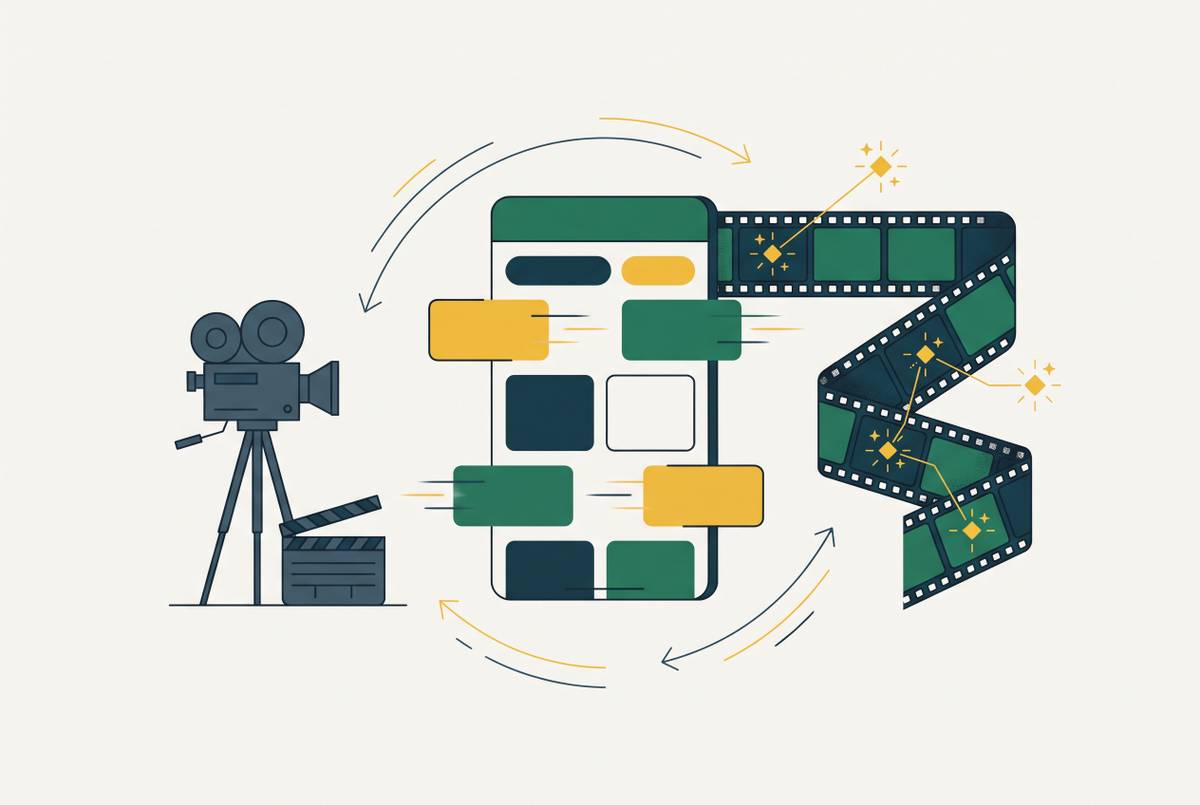
“Just update the slides” sounds like a reasonable answer. It treats outdated training as a small fix to a job that is otherwise done. But software roadmaps move on sprint cycles, while training is still produced on curriculum cycles. A course can take weeks to build, only for a renamed button or reordered workflow to make its instructions wrong. The timing of the work itself can cause the mismatch.
Nor does a product change stay inside one course. The same feature may show up in screenshots, descriptions of workflows, explanations of features, and integration guides in dozens of courses. A single release can therefore create a broad revision surface, even when the product change itself is small. The next release does not wait for those revisions. Drift continues across the library, leaving teams to track a moving product through materials built at different times.
That makes “finished” a temporary state for software training. A course may be accurate when published and unreliable by the time a learner needs it. As releases come more often, each piece stays useful for less time before someone needs to check it.
How L&D teams lose most of their update time before writing a single word
The first cost is a hidden tax on L&D time. Before anyone can revise a lesson, someone has to work out what changed and where the old version still appears. That means comparing product documentation against courses, cross-referencing release notes with help articles, and checking policy pages against compliance modules. None of that work produces the revised lesson. It establishes what the revision needs to cover.
This detective work consumes the majority of update cycles. It is essential, but it displaces instructional design. Time spent finding stale instructions leaves less time for curriculum design and learner experience work that helps people do their jobs. The team remains busy, yet its capacity to improve training shrinks. That loss rarely appears as a separate line item because it sits inside the ordinary work of maintaining the library.
A larger, more mature collection gives the team more places to check before it can confidently change anything. The detection work expands even when the underlying product change is modest. As audit and triage absorb available hours, fewer corrections reach learners, and some drift remains undetected. The next link in the cost chain begins when someone tries to use those instructions.
The support ticket surge that follows when training contradicts the live product
The learner follows the course and reaches a dead end. “The training said to click here, but that button doesn't exist anymore” is a direct route from content drift to a support escalation. The learner has done what the organization asked, yet still cannot complete the task. Support must now resolve a discrepancy that should have been removed from the training.
These interactions consume more than the learner’s patience. Each one takes support time to bridge the gap between the published instructions and the live product. The request may look like a product-use question, but its cause is inaccurate guidance. Support is effectively subsidizing a content maintenance failure. That distinction is important because handling the ticket does not, by itself, correct the course that caused it.
Repeated contradictions also change how learners treat training. When following the instructions keeps leading to confusion, confidence in the program erodes. Some learners eventually stop engaging with it altogether. At that point, the problem is no longer just an incorrect button label or workflow. The organization has a knowledge-transfer system that part of its workforce no longer trusts enough to use.
For customers, inaccurate guidance also slows onboarding and extends time-to-value. Training that should help them get started instead creates another obstacle between access to the software and useful work. That delay affects retention and renewal rates, so the cost goes beyond support. A maintenance failure that began inside L&D can therefore follow the customer through the relationship.
How stale content in sales enablement stalls deals and wastes rep time
Deals stall when reps reference features, pricing, or competitive positioning that no longer reflect the product. The rep needs material that supports a current conversation. When the content is stale, the library becomes an unreliable source of sales support. The gap between close and realized value then grows if customer education is stale too.
Reps often respond by rebuilding material themselves. A significant share recreate content that already exists because they cannot find it or do not trust that it is current. This consumes selling time and creates a version control problem. Instead of one maintained explanation, the organization has more copies whose accuracy can diverge.
AI-assisted sales tools can amplify the same weakness by using outdated product documentation or stale case studies to produce material that misleads prospects.
CSO Insights research puts forecasted deal win rates at approximately 49% for organizations with formal enablement programs versus 42.5% for those without. That comparison establishes a commercial case for formal enablement. It does not isolate content maintenance as the cause of the difference or measure the loss from a stale library. The narrower conclusion is still clear. An enablement program cannot reliably support current selling when reps distrust its materials or use claims that no longer match the product.
The compliance dimension: where content obsolescence moves from costly to legally consequential
In healthcare, financial services, energy, and manufacturing, training content has to match the rules and procedures now in use. References to superseded regulations, outdated procedures, or discontinued product features can lead to audit findings and remediation requirements. Severe cases can bring regulatory penalties. The cost is no longer limited to lost work time or a difficult customer conversation.
A single audit finding can cost more than a year’s L&D budget. Reputational damage adds another burden that is harder to quantify. Internally, a training-linked compliance failure erodes confidence in L&D. Externally, it signals that the organization has not kept its operating guidance aligned with its obligations.
Software organizations serving regulated industries face two moving targets. Their products change on one schedule, while their customers’ compliance environments change independently. A course can become stale because the software changed, because the applicable requirements changed, or because both did. Keeping it accurate therefore requires tracking both sources of drift. Reviewing only product releases leaves part of the exposure untouched.
Why the cost chain compounds rather than accumulates linearly
When audit and triage take up L&D’s time, fewer updates get made. More outdated content then remains in circulation, creating support demand, disrupting commercial work, and increasing compliance exposure at the same time. One unresolved gap can feed several of them before anyone identifies the shared cause.
The responses to stale content can deepen the problem. Reps who rebuild materials leave more versions to keep up to date, while learners who lose trust in training are harder to reach through the program already in place. Correcting the original course does not automatically recover that lost confidence. A skills gap may remain out of view until it appears as an employee error, a failed audit, or a churned customer. By then, the consequence is far removed from the instruction that helped cause it.
Drift itself is usually quiet. Content can diverge from the product across a library without triggering an alert, while the visible failures appear in other teams’ work. That separation makes the total cost hard to see. Where an organization cannot accurately calculate the return on learning initiatives, the finance function also lacks a clear view of what neglected maintenance is costing. Work with a dispersed cost and no clear total is easy to underfund and underprioritize.
Faster shipping tightens this loop further. Each piece of content has less time to remain useful before another change can invalidate it, so the detection and revision workload returns more quickly. A periodic cleanup may fix the backlog without changing the conditions that created it. If the cost grows through repeated, undetected drift, the intervention has to reach the detection and update cycle itself.
What breaking the compounding cycle actually requires
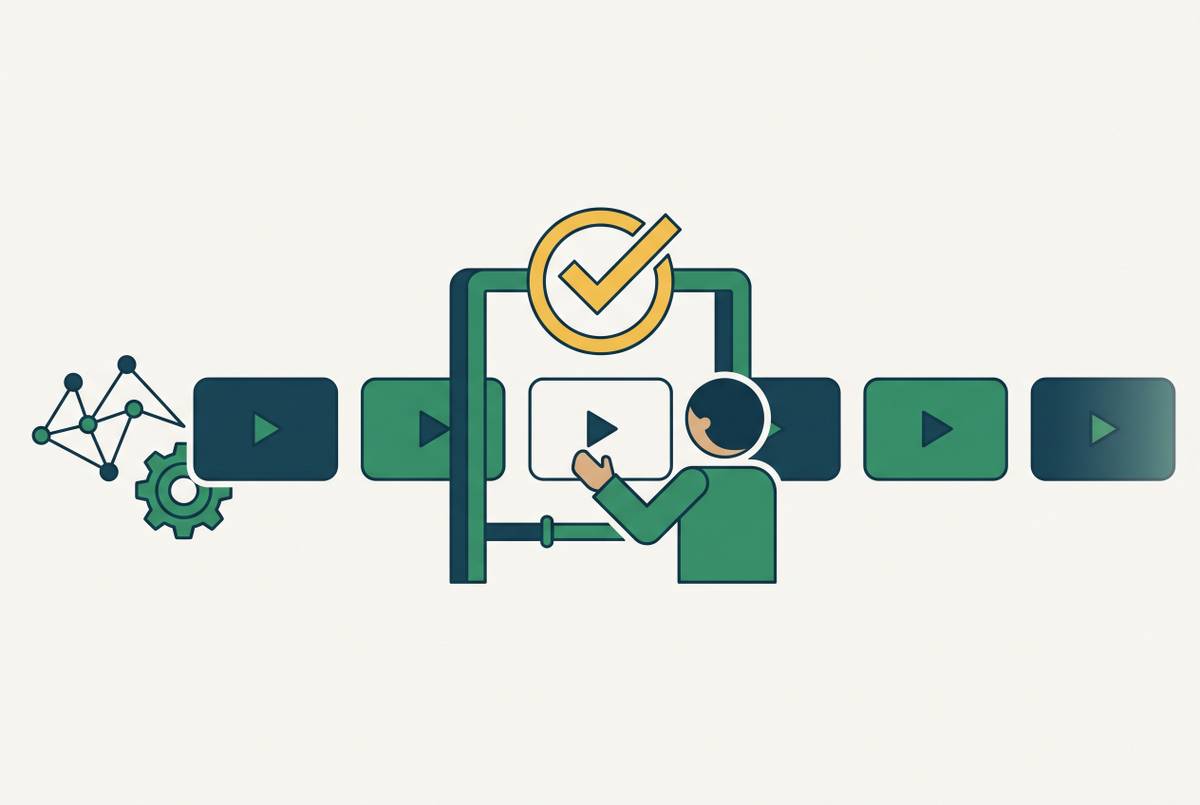
Content maintenance needs to become a continuous workflow. Its starting point is a systematic detection layer that automatically identifies where deployed content has diverged from the live product. Without that mechanism, L&D will keep spending most of its update capacity on finding problems, leaving less capacity for fixing them. Faster authoring cannot compensate for changes the team has not identified.
How content is put together affects how much each fix costs. Short, modular units let teams revise separate intros, body segments, visuals, captions, and narration scripts without turning every change into a full rebuild. A long, locked edit does the reverse. Even a small correction can become a major production task because the affected part is difficult to separate from the whole. Modularity makes the scope of the update better match the scope of the change.
AI-assisted production fits after that detection and structural work. Text-led revisions, regenerated voiceovers, and reusable visual templates can reduce the time and cost of making corrections. A script change need not require a full re-shoot. The source’s accuracy remains a separate question from production assistance.
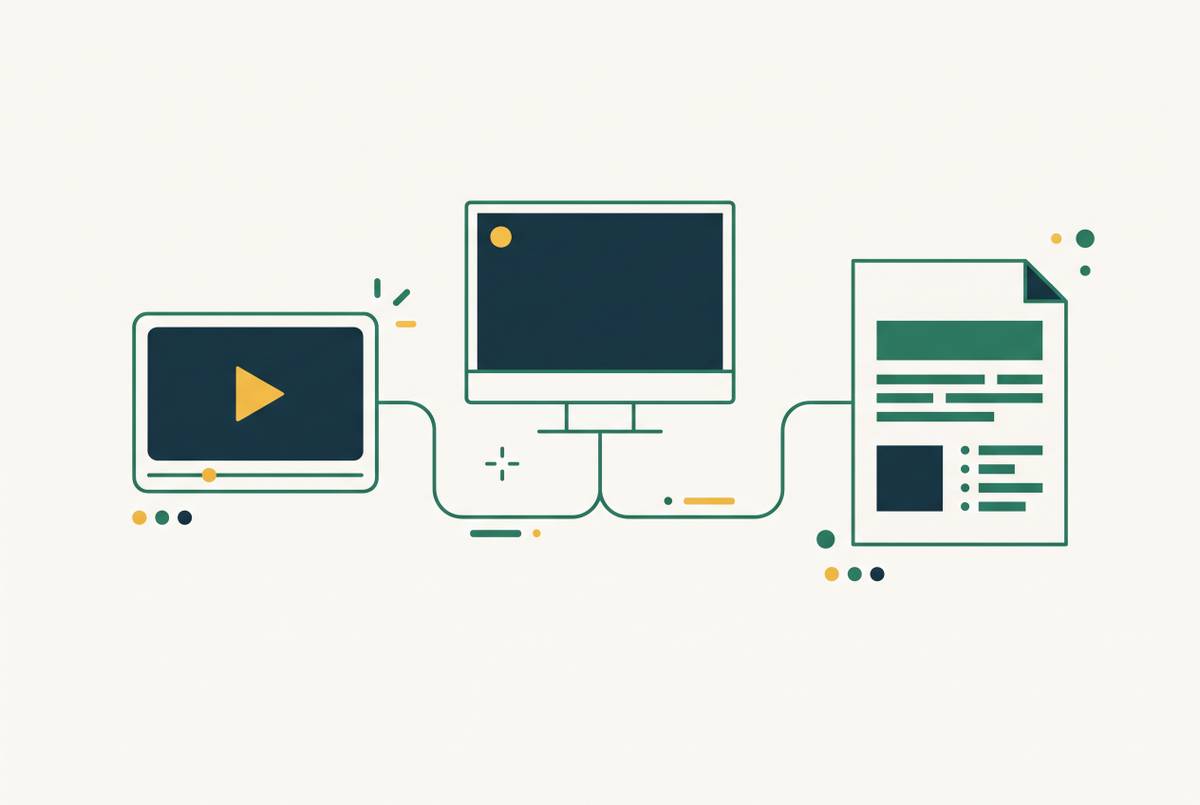
Producing video and step-by-step documentation together also removes a source of drift. When both come from a single screen recording, the team can make the video and article without a manual handoff between separate workflows. The same AI-processed source can become the course update and the updated SOP together. That reduces the number of independently maintained versions. It also closes the gap between correcting one format and getting the other caught up.
For global teams, localization belongs inside the same update workflow. Leaving it as a separate project after content is finalized means non-English audiences can remain on stale versions for weeks. One-click translation of updated content can make current guidance available to those audiences at the same time as English audiences.